
Active leaks and ceiling stains
We trace the entry point, check flashing and penetrations, and repair the roof assembly where water is getting in. Interior stains often show up far from the actual leak.
Serving Farmington Hills, Michigan & surrounding areas
Mon–Fri 8am–6pm Sat 9am–2pm
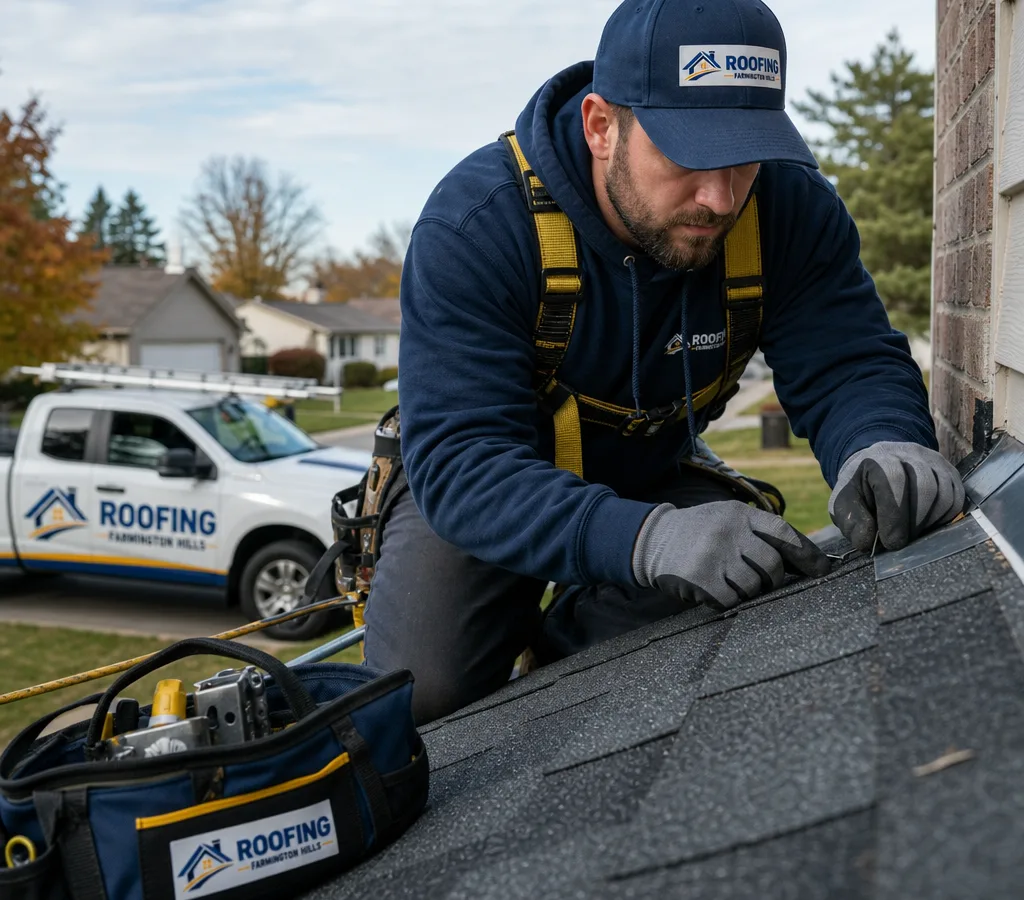
Roof repair in Farmington Hills, Michigan
Stop leaks fast, fix storm damage correctly, and get a clear repair plan backed by a careful roof assessment and photo documentation.
Find the real entry point
If you searched for roof repair Farmington Hills MI, you are probably dealing with something urgent: a ceiling stain after heavy rain, shingles on the lawn after wind, or a drip that shows up only when the storm hits from one direction.
Roofing Farmington Hills provides roof repair in Farmington Hills, Michigan for the problems that actually cause water intrusion and premature roof wear: failed pipe boots, lifted or missing shingles, punctures, loose step flashing, nail pops, aging sealant at penetrations, and ventilation issues that trap moisture.
Farmington Hills sits in the Detroit metro and sees real seasonal swings: freeze-thaw cycles, ice dams during winter thaws, and spring and summer storms that can lift shingles or drive rain under flashing. Those conditions matter because many leaks are not located directly above the stain. Water can travel along decking, rafters, or a valley line before it shows indoors. A proper repair starts with a methodical assessment so the fix lasts.
Targeted repair work
We trace the entry point, check flashing and penetrations, and repair the roof assembly where water is getting in. Interior stains often show up far from the actual leak.
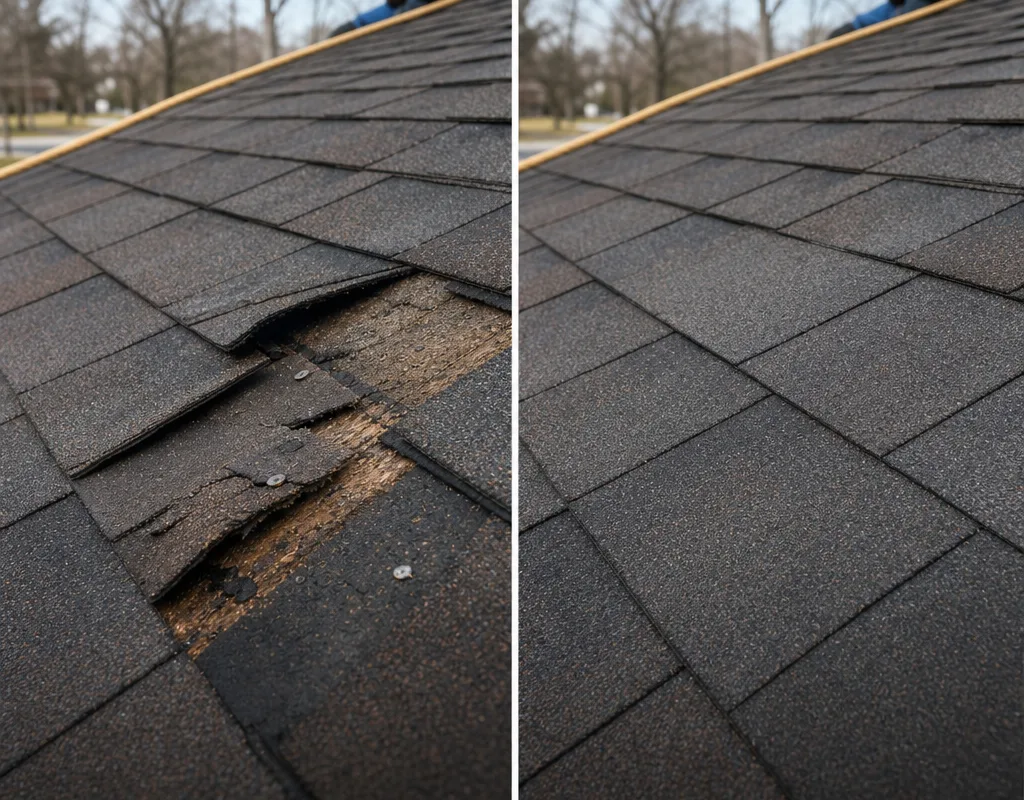
Wind can break the seal strip or pull fasteners. We replace damaged shingles, re-seat surrounding courses, and verify the repair ties into the existing pattern and exposure.
Step flashing, counterflashing, and apron flashing are frequent culprits. We look for gaps, corrosion, loose edges, and old patching that has cracked.
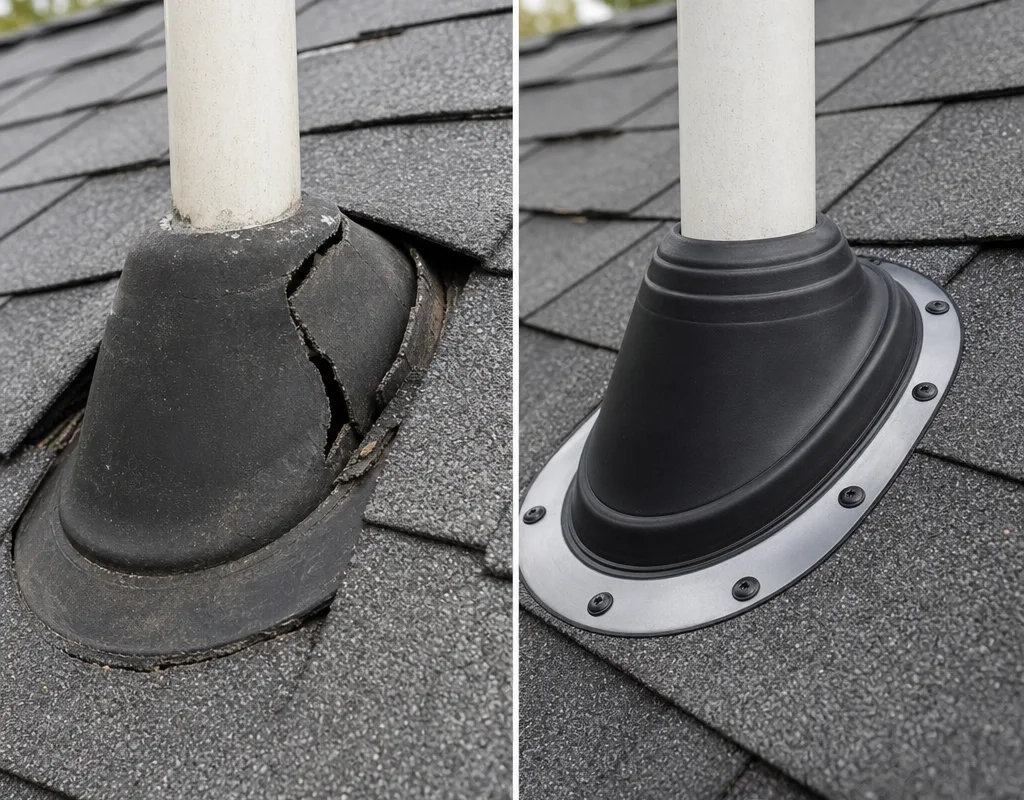
Rubber collars dry out and split over time, especially after harsh winters. We replace the boot or rebuild the seal detail so it sheds water properly.
Valleys concentrate water flow and can hide nail pops or lifted material. We inspect valley lining, shingle cuts, and ridge cap integrity where wind can start damage.
After a thaw, we evaluate eaves, underlayment exposure, and any back-up at the gutter line that can push water under shingles.
On-site leak tracing
A roof repair should not be a guess. During an on-site visit in Farmington Hills, we focus on three outcomes: locate the true entry point, confirm what failed and why, and lay out a repair scope that makes sense for the roof’s condition.
Our assessment typically includes:
After identifying the issue, we explain repair options in plain terms. Some problems call for replacement of a component such as a pipe boot. Others require rebuilding a flashing detail so water is directed back onto the shingle field.
If your roof is near the end of its life, we will tell you honestly when a repair is likely to be temporary so you can make an informed decision. To get a sense of who we are and the areas we serve, you can start with Roofing Farmington Hills MI.
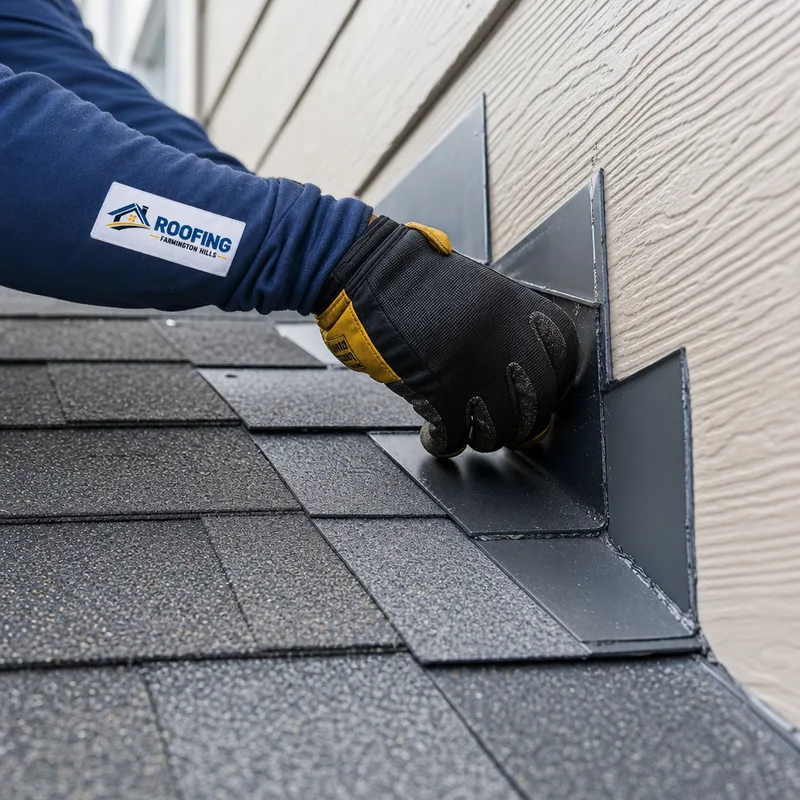
Assessment to final check
We ask targeted questions about when the leak happens, where it shows, and what you have already noticed outside. This helps us plan access and materials.
We inspect the roof with extra attention to penetrations, flashing lines, valleys, and eaves. We document findings with photos so the scope is clear.
You get a straightforward explanation of what failed, what work is recommended, and what the repair does and does not include.
We replace damaged components, re-secure loosened areas, and rebuild flashing details as needed. When an exact shingle match is unavailable, we discuss the closest practical option before work starts.
We verify key overlaps and transitions, check surrounding courses for collateral damage, and clean up the work area.
On-site assessment required
Most roof repair jobs in Farmington Hills typically range from about $250 to $1,200, depending on the type of failure and how much surrounding material must be removed and rebuilt. A small shingle or pipe-boot repair is often on the lower end, while chimney or wall flashing repairs, valley work, or leak tracing with multiple repair points can land higher.
Your final price depends on roof height and pitch, access and safety setup, how many layers exist, material availability for matching, and whether decking or underlayment has been compromised. The exact scope and cost are confirmed after an on-site roof assessment.
Repair details that matter
Homeowner experiences
Water was dripping into a bedroom during heavy rain. They found the problem at a flashing line that had been patched before, explained it clearly, and fixed it the same week. The next storm was a good test and it stayed dry.
After a windy night we had shingles missing near the ridge. The repair matched well and they also pointed out a loose vent boot that would have turned into a leak later.
Answers before you decide
Response time depends on weather and current demand, but leak situations are prioritized because water damage gets worse quickly. If conditions make roof work unsafe, such as high wind, lightning, or icy surfaces, we will schedule the earliest safe window and discuss temporary containment steps inside the home while you wait.
Yes, many roof repairs can be completed in winter, but temperature and surface conditions affect what is practical. Adhesive seal strips on asphalt shingles may not bond well in cold weather, so we focus on mechanical fastening and proper flashing integration, and we may recommend a follow-up check when temperatures rise.
Water often enters at a flashing detail or penetration and then travels along the roof deck or framing before it drops into insulation and shows as a ceiling stain. That is why leak tracing includes examining uphill roof planes, valleys, and wall intersections, not just the spot directly above the interior mark.
Yes. Flashing repairs are a core part of roof repair work because step flashing and counterflashing manage a lot of water flow at walls and chimneys. Proper repairs usually require lifting surrounding shingles and rebuilding overlaps rather than relying on surface caulk.
We try to match as closely as possible, but exact matches can be hard if the shingle line is discontinued or the roof has faded. Before we start, we explain what match is realistically available and where a slight color difference may be visible.
If the roof is otherwise holding and the problem is localized, such as a failed pipe boot, a small flashing break, or a limited wind-damage area, repair is often sensible. If there are widespread issues like recurring leaks in multiple locations, brittle shingles, or failing details across the roof, we will tell you when repair is likely to be short-lived so you can weigh longer-term options.
Start with an on-site assessment
Tell us what you are seeing and when it happens. We will inspect the roof, document the cause, and recommend the repair scope that fits your roof’s condition and your timeline.